
By Ahtaram Shin, a columnist, researcher & editor at Rohingyatographer
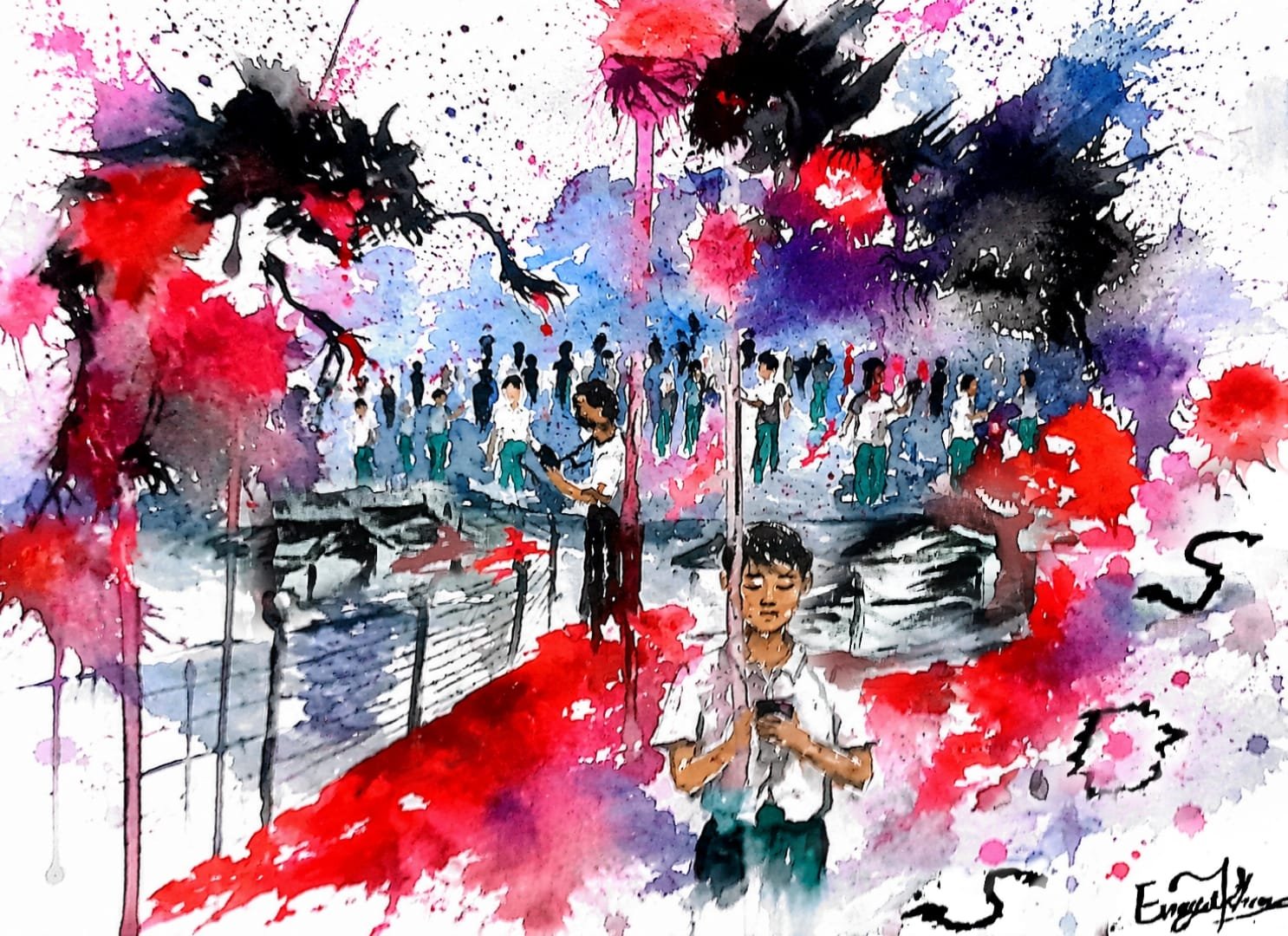
At night in the camps, when the noise of corruption and darkness of exploitation over the vulnerable people sparked, young Rohingya Gen-Z refused to sleep and chose to up speak louder than ever heard.
The Rohingya Gen-Z is one of the latest groups of young men and women who stand taller to speak up for their historical injustice, oppression, discrimination, corruption, misrepresentation and call an ultimate of this victimization.
In every era, there comes a generation that refuses to remain quiet, sleep in fear, challenges injustice, questions power, and dares to imagine a different future. Today, one of that sort of generations rising from Rohingya is Rohingya Gen-Z.
“We are the only generation who grew up by confronting hardship from birth to death. Pain, fear, injustice, discrimination and restrictions in all layers of our lives; now we choose to stand for our right, to eliminate misrepresentation, exploitation, dictator, and call down all the troublemakers,” said Sahat Zia Hero
Across the world, Gen-Z has proven that young people can make a change and give a hope for a just future but why not, the Rohingya. From youth-led movements for democracy and justice to global campaigns demanding human rights and accountability, why not Rohingya youth movement from camp to Arakan and reshape their future from the older systems which tried to suppress them. As Malala Yousafzai once said, “We realize the importance of our voices only when we are silenced.” This realization has driven a generation to speak louder, stand firmer, and act braver.
For decades, the Rohingya people have endured statelessness, violence, and a continued cycle of displacement. In the edge of their end under the Tsunami of genocide, Young Rohingya men and women believed that their hope would slowly fade into silence, the latest displacement almost crush a decade in Bangladesh but there is no change, ensure any right and manage to go back home but rather the same root of Myanmar military informant are taking position in camp over again. In Myanmar, the most bitter truth of Rohingya’s decades-long suffering had the great role of some Rohingya informant is known as ‘Tabbay‘.
The Myanmar government used some of our own people as their informant from every region and they worked as the government spy against their own people and harmed the entire villagers. Dil Mohammed was one of them who was raised as an informant of NaSaKa, military Junta and other units of government. He was also a god father of smuggler and murdered.
Dilla was sentenced to prison with a smuggling and murder case in 2017 and released in 2021 with the Myanmar national prisoner release. Since then, he has been working as an informant (Tabbay) of Myanmar. He had tortured, extorted, mentally and physically abused to all the people of Maungdaw who didn’t flee in 2017. Even he was the first person who helped to succeed in the mission of military conscription in 2024,” said Ali Jinnah Hussein.
Now he wears goatskin and act as a leader of Rohingya in camp under the brand of Rohingya Community Peace and Repatriation (RCPR). He himself claimed that he worked as mediator and made alliance among the Rohingya armed groups and bring peace. According to Gen-Z youth, this is just a mouthpiece but rather he became a threat for Rohingya people again.
The Rohingya youth is again under the pressure of Dil Mohammed’s dictator rules and restricted to speak up or write anything in social media. He has camp-wise responsible members maji and Moula and threatens youth through them if they speak up or not support. As a decent instance is Mohammed Ullah. One of the members of Dil Mohammed from camp 7, Block-C, named Mv Edris who threated Mohammed Ullah with the order of Dil Mohammed and beaten. As he had no choice, he tried to run in Malaysia and died by drowning their boat along with 250 other people. The evidence and testimonies are recorded of Ullah are discovered from his mobile.
As the Rohingya Gen-Z started their peaceful online movement in search of justice and freed themselves from another dictator rule and troublemaker. Many youths broke silent and widely shared information of threat. Numerous reports analysis showed that they suffered in the hands of Dil Mohammed both in Myanmar and camp as well as in many other relevant groups.
Although there are testimonies and evidence that have been getting viral in social media and Dilla used his followers to abuse and threaten differently in social and in person. If today’s violence is not answered, tomorrow they might make to Gen-Z. So, the Rohingya Gen-Z is asking to take required action before too late otherwise there will be different consequences and authority will not have answer to give to the world by tomorrow.
As Rohingya Gen-Z consistently spoke out against his alleged criminal background and corruption, tensions continued to rise. First, he publicly threatened the youth, and later, according to an eyewitness report, unknown individuals were allegedly used to murder the leader of the Arakan Rohingya Organization (ARO), Abdu Halim, who was killed on May 5 at around 7:00 PM in Camp 8 East..
Many of Dil Mohammed supported inciting that the Rohingya gen-Z is stopping him to bring peace
This movement is not fueled by anger alone but this generation will not choose to silent anymore, said Myo Thant.
The Bangladesh government has generously hosted Rohingya refugees but the voices of these young men have not received the attention they deserve. They used to meaningfully engage with or recognize the youth calls for justice emerging from within the camps. Even more concerning is the quiet response from Bangladesh’s own Gen-Z, whose solidarity could amplify this movement beyond borders. Bangladesh students are one of th great inspiration for Rohingya Gen-Z
Similarly, many international human rights organizations have yet to fully acknowledge this grassroots awakening. Reports are written, statements are issued but the lived realities, the internal struggles, and the emerging leadership within the Rohingya community often remain underrepresented and open their ear to listen to what they are going to say!
As Martin Luther King Jr. powerfully stated, “In the end, we will remember not the words of our enemies, but the silence of our friends.” This silence is what makes the struggle heavier.
Within the camps, young people are organizing, documenting abuses, raising awareness, and challenging narratives imposed upon them. They are speaking against exploitation, against forced control, and against the misuse of power. These are not small acts. These are the early foundations of accountability and community-led change.
Imagine the strength of this movement if it were amplified by Bangladeshi youth, supported by global student communities, and recognized by human rights platforms. Imagine if their voices were not echoes within camps, but calls heard across nations.
As Nelson Mandela once reminded the world, “It always seems impossible until it is done.” Every successful movement once stood where this one stands now fragile, overlooked, but full of potential.
This is a moment of choice.
To the government of Bangladesh: engagement does not weaken authority. It strengthens justice. Recognizing and listening to Rohingya youth voices can foster stability, trust, and meaningful progress within the camps. Draw your attention towards Rohingya Gen-Z, support them to end injustice, exploitation, misrepresentation and go back to their home with their rights, dignity and voluntary repatriation